Natural Japanese Notes
Real Japanese from Real Lessons
Small differences in wording, nuance, and expression that come up in real Japanese lessons.
Small differences. More natural Japanese.
Words that look similar. Expressions that are grammatically correct but feel slightly different to a Japanese speaker. These short notes focus on the small details that help your Japanese sound more natural and more like you.
Explore the Notes
Short explanations inspired by questions, mistakes, and discoveries from real Japanese lessons.
-
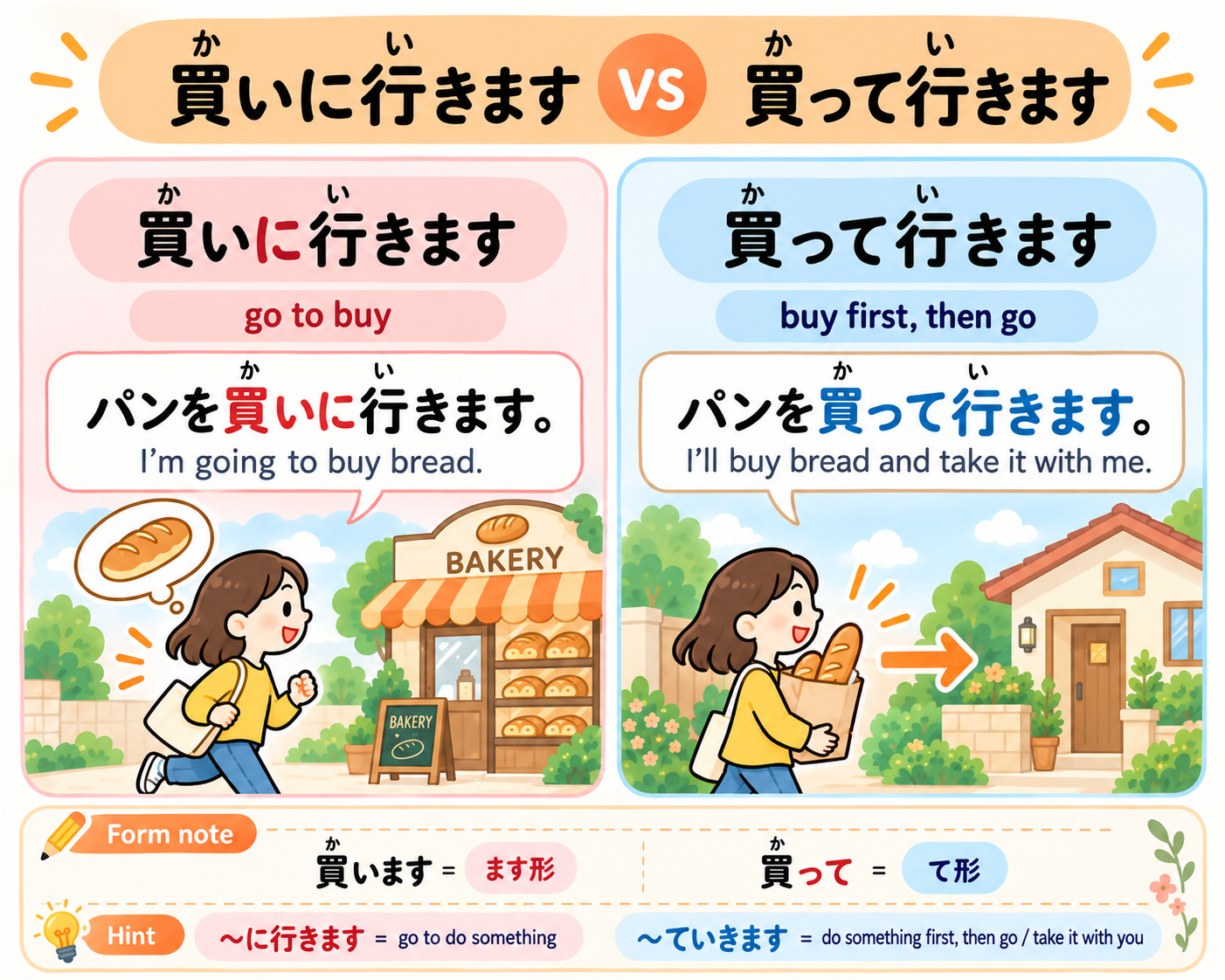
「かいに いきます」vs「かって いきます」|What’s the Difference?
What is the difference between かいに いきます and かって いきます? L…
-

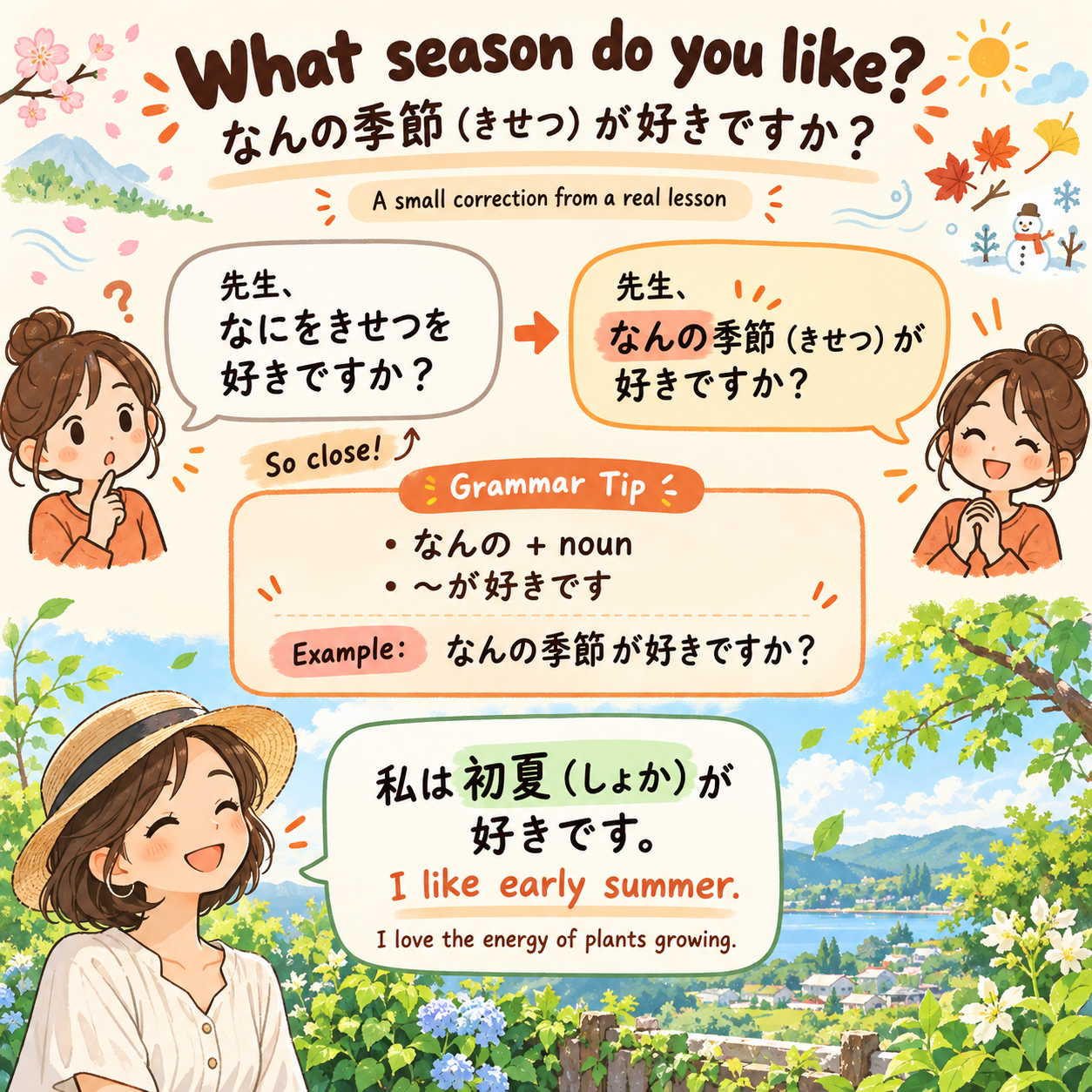
What Season Do You Like?|「なんの季節が好きですか?」
Learn how to ask “What season do you like?” naturally i…
-
「はい/いいえ」だけじゃない|Trying to Say More in Japanese
A simple answer was possible, but the student chose to …
-
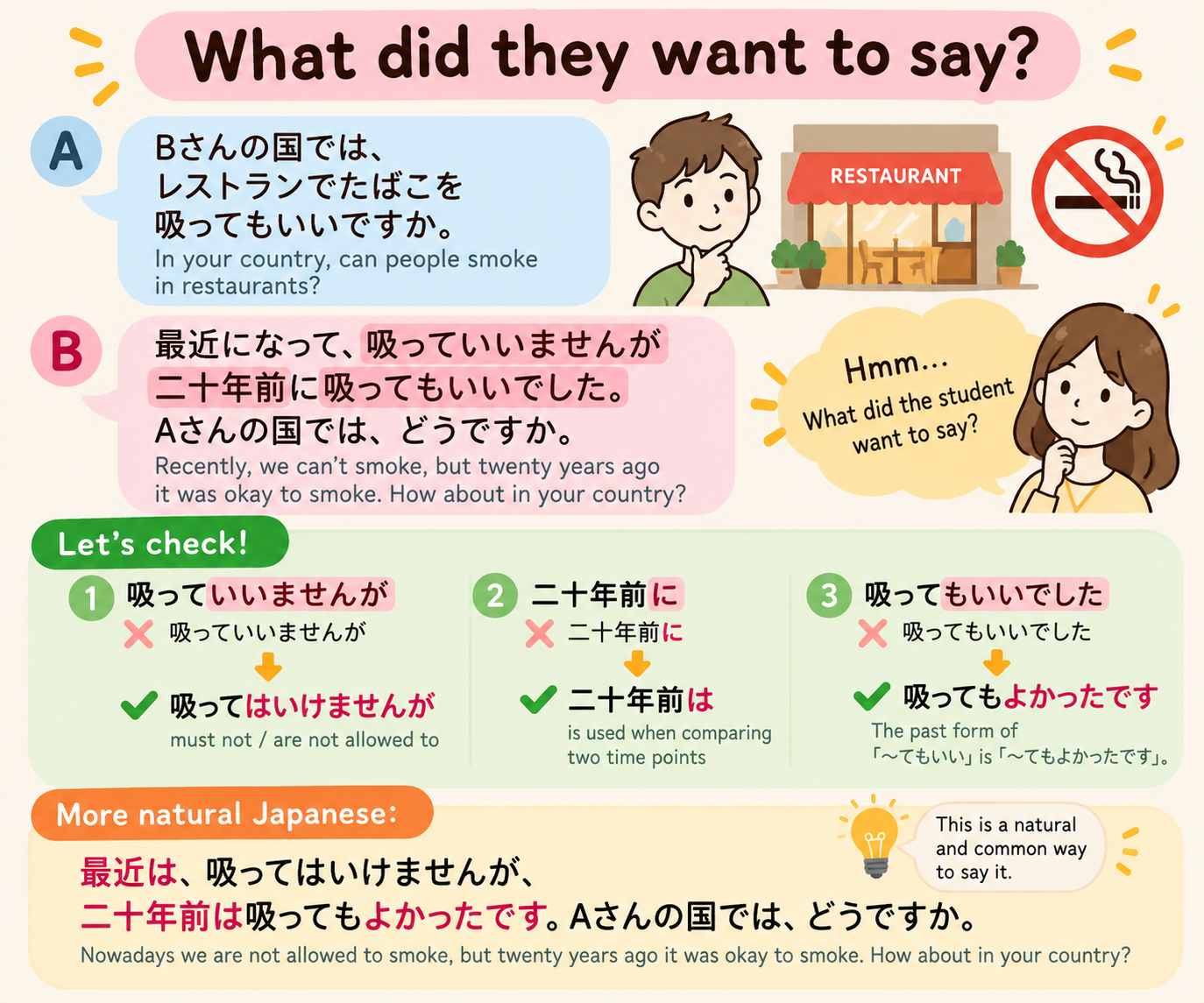
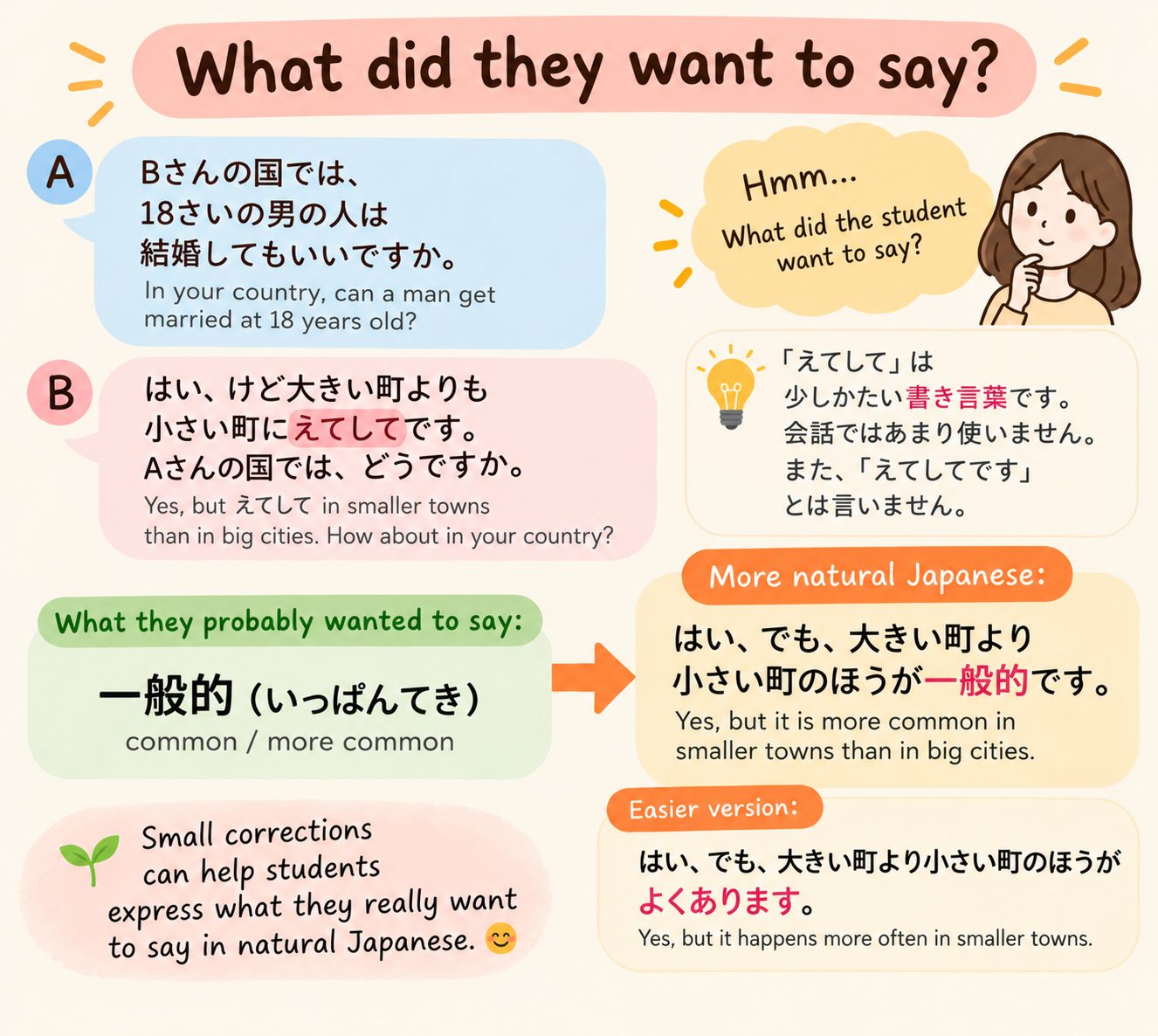
What Did They Want to Say? 「えてして」の自然な使い方
A student tried to use 「えてして」 in conversation. The word…
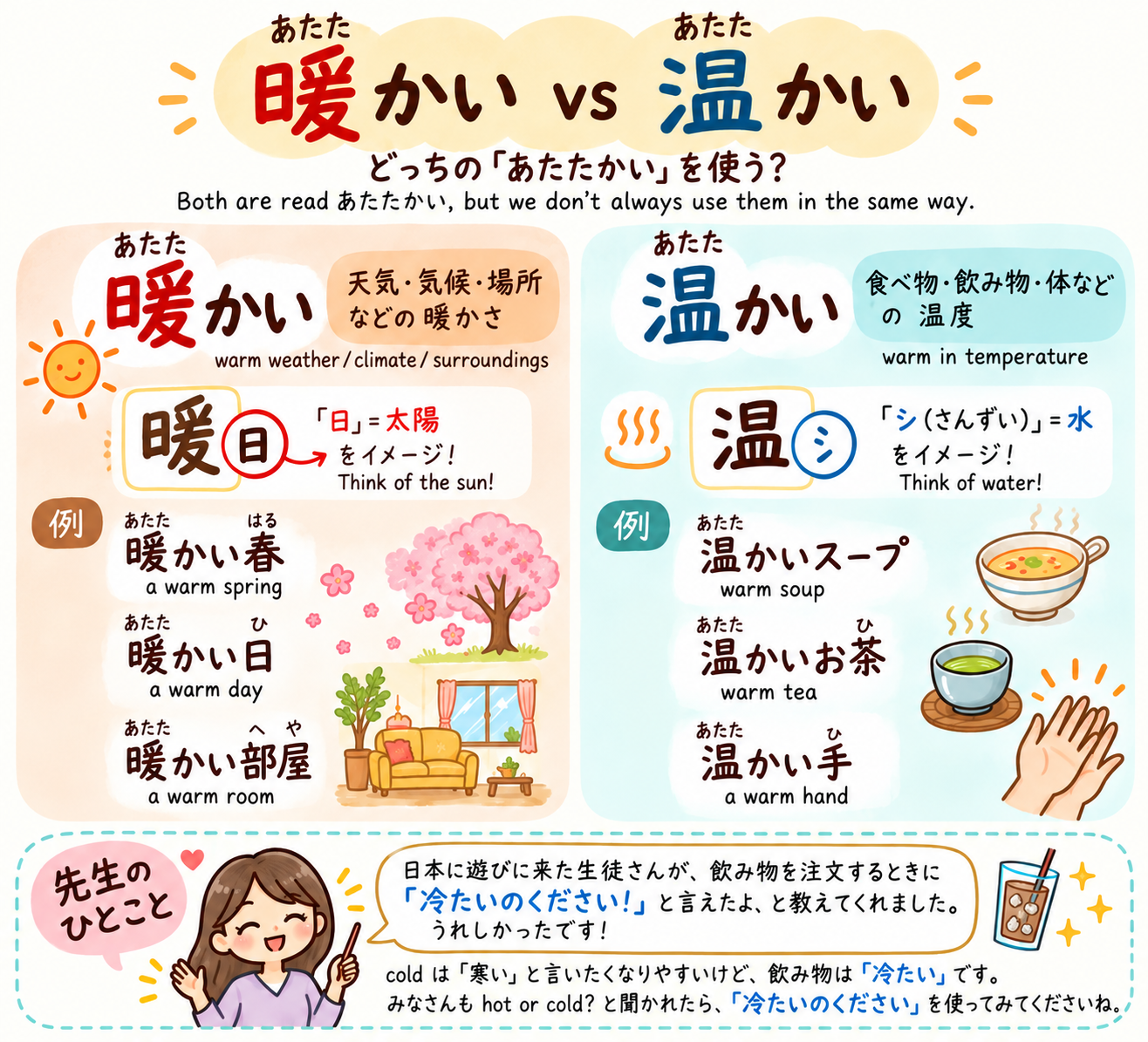

Notes from real lessons
These are not textbook definitions copied into a blog. Many of these notes begin with something that actually came up in a lesson or homework: a sentence that sounded slightly unusual, two similar words that were difficult to choose between, or a question about how Japanese really sounds in everyday life.
Want to practice Japanese that sounds like you?
In my lessons, we do not only look at whether your Japanese is correct. We also look at how it sounds, what nuance it gives, and which expression fits what you really want to say.
Explore Personalized Japanese Lessons →